
%20copy.avif)
All guests, including Bob Dylan Center members, may reserve tickets online in advance. Members receive free admission by logging into their account at the top left corner when prompted during the purchase process.
Following the official discontinuation of the U.S penny, the Bob Dylan Center is transitioning to a cashless system as of Oct. 1, 2026. Tickets to the centers can be purchased online in advance or at the front desks via credit/debit card and mobile wallets. Cash donations to the centers will still be accepted. Thank you for your understanding and cooperation.
$15 + tax
$12 + tax
Dual Tickets are admission to both the Woody Guthrie Center and Bob Dylan Center at a discounted price, under the partnership of American Song Archives.
$22 + tax
Free
Wednesday – Sunday, 10 a.m. – 6 p.m.
The Bob Dylan Center is located in the heart of the Tulsa Arts District — a diverse, culturally robust area in the northern section of downtown Tulsa.
116 E. Reconciliation Way
Tulsa, Oklahoma 74103
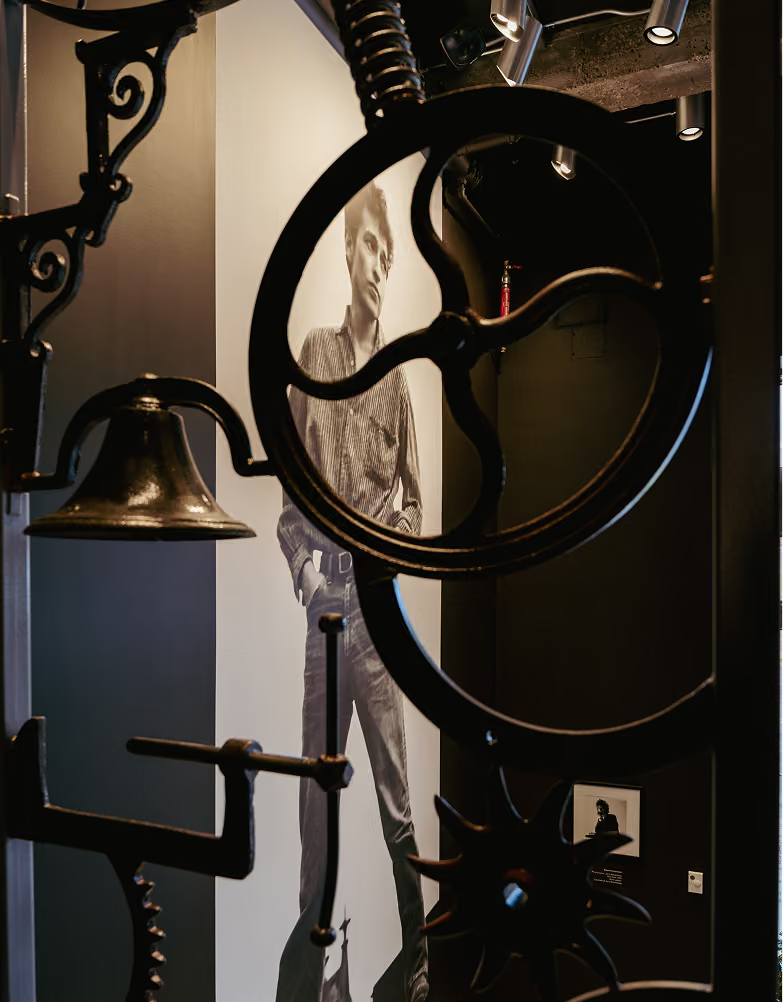
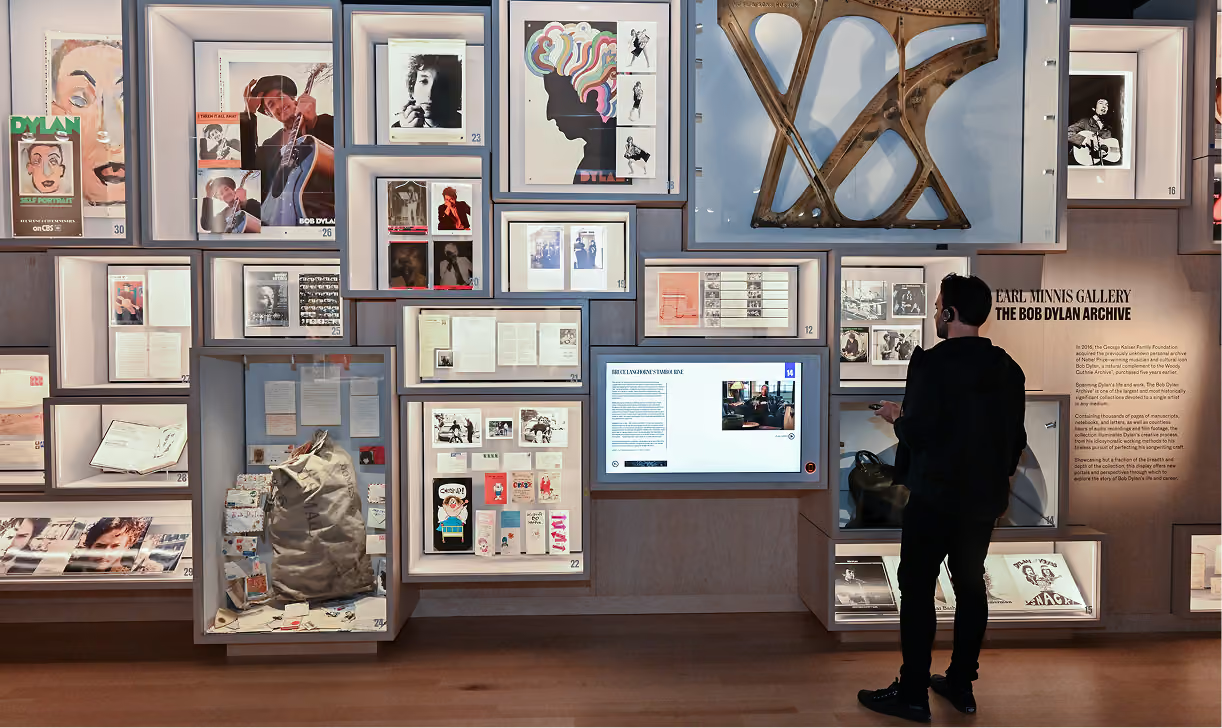
The Bob Dylan Center is a self-guided experience. You'll be provided with an audioguide and headphones when you arrive, and are encouraged to explore the galleries and exhibitions at your own pace. You'll move through rotating exhibits featuring handwritten lyrics, rare recordings, personal photographs and more, all drawn from a collection of over 100,000 items. Plan for a couple of hours, and be sure to leave time for the gift shop on your way out.

The Bob Dylan Center is located in the heart of the Tulsa Arts District. The Tulsa Arts District offers a variety of parking modes. If you park on the street, in a lot or a garage, you are seldom more than two to six small city blocks from your destination. The primary offering is street/curb side parking. Metered parking is enforced between 8 am–5 pm, Monday through Friday except for official holidays. For more information about parking in the area, visit the Tulsa Arts District website.
Our entrance and galleries are fully accessible for visitors using wheelchairs, walkers, or other mobility devices. All public spaces are on accessible routes.
An elevator provides access to all exhibition levels.
A non-motorized wheelchair is available for visitor use at no charge. Please ask at the front desk when you arrive, or contact us in advance to reserve it.
Service animals trained to assist individuals with disabilities are welcome throughout thecenter.
Accessible restrooms are available for visitors.
The Bob Dylan Center is committed to being welcoming and accessible to all visitors. If you have questions about accessibility or would like to request accommodations before your visit, please contact us at info@bobdylancenter.com or call us at 918.392.3353.
Bob Dylan Center guests must respect others. No disrespectful or inappropriate behavior. No loud or offensive language, profanity, indecency, nudity, inappropriate clothing, destruction of property, intoxication or illegal drugs, or inappropriate displays of affection. No images, symbols, or signage generally considered offensive or threatening. No soliciting, proselytizing, surveying, or distributing of handbills or flyers. Management may remove and revoke usage privileges of guests who violate this Code of Conduct.
Bags larger than a standard backpack should be left at home, in your vehicle, or in the coatroom. Standard backpacks and bags should be worn on one shoulder while visiting the galleries. Small lockers are available for checking items and we have a publicly accessible coat room. Umbrellas must also be left in the coatroom.
The Bob Dylan Center honors and acknowledges that it resides in the traditional and unceded territories of the Creek (Mvskoke), Osage (Wahzhazhe), Quapaw (Ogaxpa), Wichita (Kitikiti’sh), Caddo (Kadohadacho) and Kickapoo (Kiikaapoi) tribal nations. We recognize these tribes and the many Indigenous tribal nations who have historically called Oklahoma home. By acknowledging the colonial history and its continuing impacts and correcting miseducation, we will no longer overlook how this land was occupied.
We further recognize that more than a century ago, this very neighborhood was destroyed by the violence of bigotry and racial hatred in the 1921 Tulsa Race Massacre. As we acknowledge the atrocities of the past, we cannot forget that the fight for equality continues and is far from over.
We ask that you take a moment to consider the many legacies of violence, displacement, migration and settlement that bring us here today. May this acknowledgment express the Bob Dylan Center’s commitment to growing and deepening its relationships with the vibrant cultural communities that precede us and still remain.
Buy Tickets
The Bob Dylan Center is open year-round in the heart of Tulsa's Arts District. Come explore the archive, experience the exhibits, and see why this is one of the most remarkable cultural destinations in the country.
Make a Donation
The Bob Dylan Center is more than a destination. It's a mission. Your support helps preserve the Bob Dylan Archive, fund school outreach programs, support guest artists, and create fellowship and internship opportunities for the next generation of creators.
.webp)